
"Raag Saraswati Chota Khayal: Where Melody Meets Expression"
- Jul 7
- 3 min read
A Chota Khayal is one of the most important stages in learning Hindustani classical music. It allows students to move beyond basic exercises and experience the beauty of presenting a raag through a structured composition. When learned in Raag Saraswati, a Chota Khayal offers an enriching musical experience that combines technical discipline with expressive singing.
Raag Saraswati is known for its graceful and peaceful nature. Named after Goddess Saraswati, the deity of wisdom, knowledge, and the arts, this raag reflects serenity and devotion through its melodic phrases. Its soothing character encourages students to sing with clarity, patience, and emotional depth while developing a stronger connection with the music.

A Chota Khayal is a shorter classical composition that is usually performed in a medium or fast tempo. Although brief in length, it provides ample opportunity to explore the personality of the raag through melodic improvisation. As learners become more confident, they begin incorporating simple alaps, bol alaps, sargam passages, and taans while maintaining the structure and mood of the composition. This process helps transform technical knowledge into artistic expression.
Learning a Chota Khayal in Raag Saraswati strengthens several essential aspects of vocal training. Students gradually develop better control over pitch, improve their sense of rhythm, and become more comfortable presenting a raag with confidence. The composition also encourages attentive listening, as recognizing the characteristic phrases of the raag is just as important as singing the correct notes. With consistent practice, learners begin to understand how each phrase contributes to the overall identity of the raag.
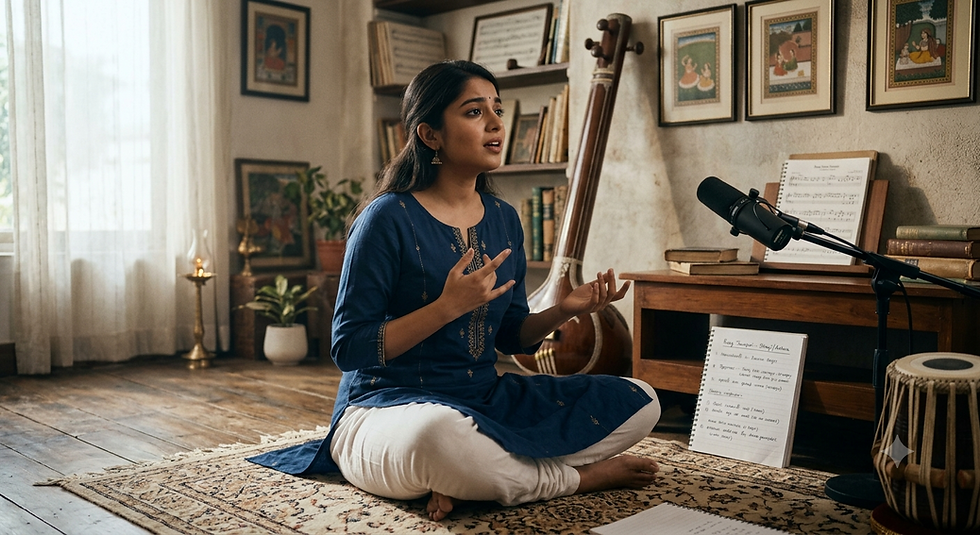
Successful learning begins with a clear understanding of the bandish. Singing the composition accurately before attempting improvisation helps establish a solid musical foundation. Practising with a tanpura enhances pitch stability, while regular practice with tabla accompaniment improves rhythmic precision. Rather than focusing on speed, students should aim for clarity, smooth voice production, and accurate pronunciation of both the lyrics and swaras. Gradually, improvisation becomes more natural as confidence grows.
Like any classical composition, a Chota Khayal presents its own challenges. Some learners may find it difficult to maintain the correct melodic movement of the raag, while others may struggle with rhythm or pitch during improvisation. These challenges are a natural part of the learning process and can be overcome through regular practice, careful listening, and guidance from an experienced guru. Patience and consistency often lead to steady improvement over time.
One of the most rewarding aspects of singing Raag Saraswati is its ability to convey peace and devotion. While technical accuracy is essential, the true beauty of the raag emerges when the singer performs with sensitivity and expression. Every phrase should flow naturally, allowing the listener to experience the calm and uplifting mood that defines this raag. Listening to accomplished Hindustani vocalists can further inspire students and help them appreciate the subtle nuances that make each performance unique.
Learning a Raag Saraswati Chota Khayal is much more than memorizing a composition. It is an opportunity to build a strong foundation in Hindustani classical music while developing musical confidence, creativity, and emotional expression. With sincere practice and proper guidance, students gradually discover the elegance of the raag and the joy of expressing its timeless beauty through their own voice.


Comments