
“The Mozart Effect Unplugged: What Science Says About Music and Intelligence”
- Nov 10, 2025
- 2 min read
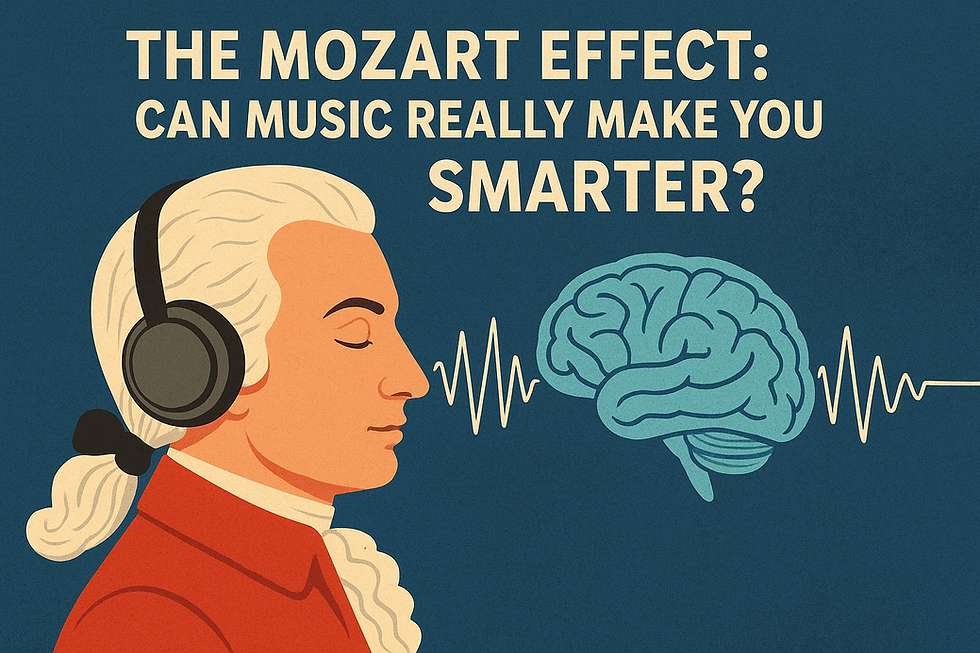
For decades, the phrase “The Mozart Effect” has echoed through classrooms and living rooms alike. Parents were encouraged to play Mozart to their infants, and students were told that listening to classical music before exams could boost their brainpower. But what’s the truth behind this popular claim? Does listening to Mozart really make us smarter—or is it just a beautiful myth?
🎼 What Is the Mozart Effect?
The term Mozart Effect originated from a 1993 study by researchers Rauscher, Shaw, and Ky. They found that college students who listened to Mozart’s Sonata for Two Pianos in D major, K.448 showed short-term improvements in spatial reasoning skills. The media quickly picked up the story, turning it into a global sensation—implying that Mozart’s music could enhance intelligence.
Soon, baby products labeled “Boost Your Baby’s IQ with Mozart” flooded the market. Governments even distributed classical music CDs to new parents. But was the effect as powerful as it sounded?
🧠 What Science Actually Says
Later studies tried to replicate the original experiment—but the results were inconsistent. Researchers discovered that the improvements in performance weren’t unique to Mozart. In fact, similar boosts were observed when participants listened to any music they enjoyed, or even engaged in activities that increased their mood and alertness.
In other words, it wasn’t Mozart himself who caused the effect—it was the listener’s emotional state. Music that lifts our spirits, energizes our minds, or helps us relax can temporarily enhance focus and mental clarity. So rather than a “Mozart effect,” it’s more accurate to call it a “Music effect.”
🎻 What This Means for Music Learners
For music learners, this discovery is empowering. It suggests that:
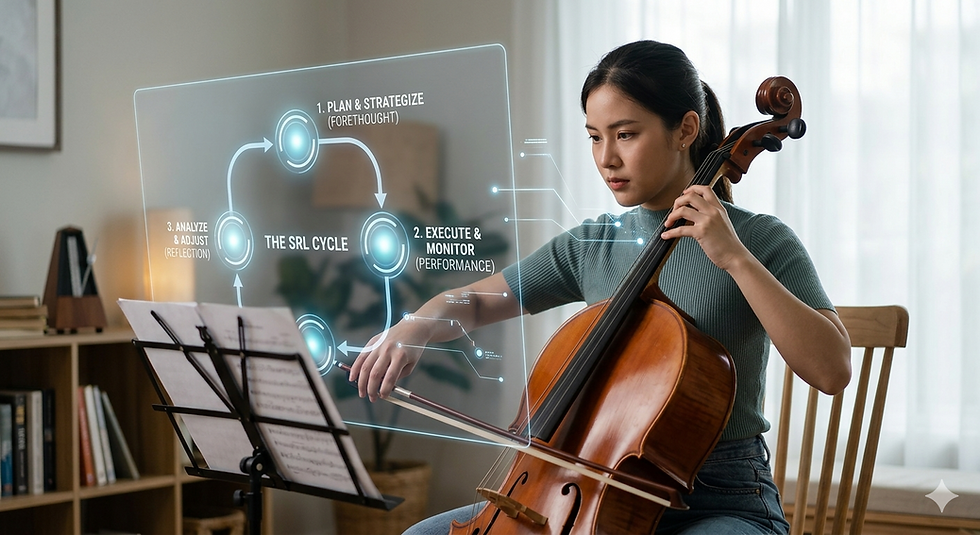
Active music learning, like singing, playing an instrument, or composing, develops brain areas linked to memory, attention, and creativity far more deeply than passive listening does.
Engagement and enjoyment in music can improve mood and motivation—two key ingredients for successful academic learning.
Regular music practice trains discipline, problem-solving, and coordination—all valuable academic skills.
So instead of just listening to Mozart, pick up your instrument, sing your heart out, or explore new ragas or talas. That’s where the real brain boost happens!
🎶 The Real Takeaway
The Mozart Effect might be a myth in its simplest form—but its spirit holds truth. Music does influence the mind, just not in a magical or instant way. It enhances learning through joy, engagement, and emotional balance.
As a music learner, remember: the power of music doesn’t lie in merely hearing it—it lies in living it. Whether it’s Mozart, Muthuswami Dikshitar, or your own creation, the music you make can shape your thinking, focus, and creativity in profound ways.
✨ Final Note
So, next time you prepare for an exam or learning session, go ahead—play some music you love. It may not make you a genius overnight, but it will surely make learning a more harmonious experience.


Comments