
"From Tha to Chapu: The Ultimate Guide to Mridangam Sollukattu
- Mar 5
- 3 min read
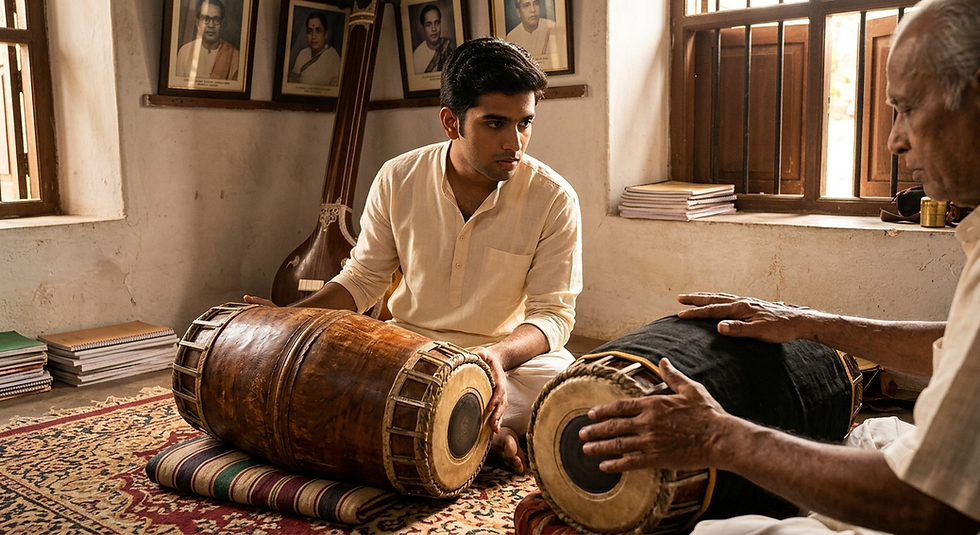
If you are just beginning your journey into Carnatic music, the Mridangam is more than just a drum—it is a melodic percussion instrument capable of "singing" rhythmic syllables. These syllables are known as Sollukattu (literally "spoken bundles").
To play the Mridangam effectively, you must master the distinct vocabulary of strokes. Each stroke has a specific technique, finger placement, and resonance. Let’s break down the essential strokes every learner needs to know.

1. The Right Side (Valanthalai)
The right side of the drum is made of layers of skin with a permanent black paste (Karanai) in the center. This side produces the high-pitched, metallic, and sharp tones.
Tha: This is a "flat" sound. You play it by striking the center of the black part with your four fingers held together, creating a muted, non-vibrating sound.
Dhi: Similar to Tha, but played specifically with the middle, ring, and pinky fingers on the black part. It is one of the "pillar" sounds used in almost every basic lesson.
Nam (or Din): This is a resonant, vibrating stroke. You strike the outer white ring (Vettu Thattu) with your index finger while keeping the pinky finger lightly touching the edge for stability.
Ta: A sharp, non-vibrating stroke played on the outer edge with the index finger. It provides the "click" in many rhythmic patterns.
Chapu (Full Chapu): The "soul" of the Mridangam. This produces a bright, ringing tone. It is played by striking the edge of the black circle with the side of your little finger or the side of your palm to let the whole drum vibrate.
Ara-Chapu (Half Chapu): A more refined version of the Chapu, often played with the index finger on the edge of the Karanai to produce a higher-pitched, melodic "ping."
Meetu: Played by striking the black circle with the index finger while the other fingers are raised, creating a clear, bell-like resonance.
2. The Left Side (Thoppi)
The left side is larger, made of thicker skin, and provides the deep, bass foundation.
Thom: The primary stroke for the left hand. It is played by striking the center of the Thoppi with the fingers (excluding the thumb) and letting the sound vibrate deeply.
The Muted Left: Sometimes played as a flat "clack" to provide a rhythmic counterpoint to the right side's resonance.
3. Combining the Hands
The magic of the Mridangam happens when both sides speak at once.
Tha (Combined): When you play the right-side Tha and the left-side Thom simultaneously, you get the grand, full-bodied "Tha" used at the start of most rhythmic cycles.
Tips for Practice
Clarity over Speed: In the beginning, don't worry about how fast you can play. Focus on making Nam ring clearly and Tha sound crisp and muted.
Finger Independence: Your index finger and the set of three fingers (middle, ring, pinky) must learn to move independently.
The "Gumuki" Secret: Once you master the basic Thom, try sliding your palm slightly across the left skin after striking it. This creates the "whooping" bass sound unique to Carnatic music.
Note to Learners: Proper fingering is essential to prevent injury and ensure the longevity of the instrument's skin. Always practice under the guidance of a Guru to ensure your hand posture is correct.


Comments